Radon is the kind of hazard that is easy to ignore, you cannot see it, smell it, or taste it. But in St. Lawrence County and across the North Country, it is a real concern that every homeowner and homebuyer should take seriously. The good news is that testing is simple and affordable, and a high reading is fixable.
Here is what you need to know about radon testing in St. Lawrence County, NY.
What is radon?
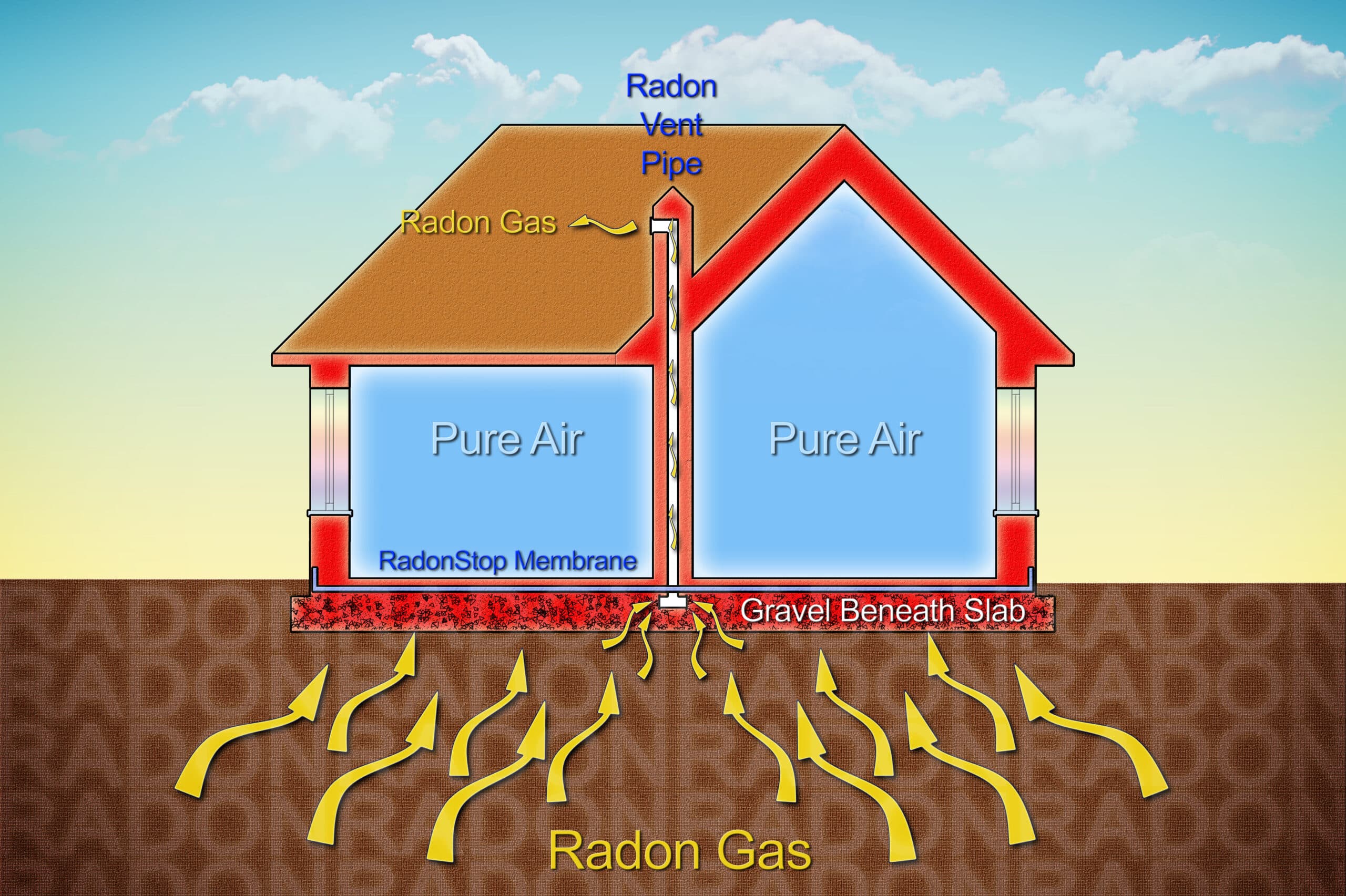
Radon is a naturally occurring radioactive gas produced when uranium in soil and rock breaks down. It seeps up from the ground and can enter a home through cracks in the foundation, gaps around pipes, sump pits, and crawl spaces. Because radon comes from the bedrock beneath us, it is very much a local issue, and Northern New York's geology makes it one worth checking.
Radon is measured in picocuries per liter (pCi/L). The U.S. Environmental Protection Agency (EPA) sets an action level of 4.0 pCi/L, at or above that level, the EPA recommends fixing the home. Even between 2.0 and 4.0 pCi/L, the EPA suggests you consider mitigation.
Why radon matters in St. Lawrence County
The EPA classifies counties into radon zones. St. Lawrence County falls in Zone 2, with predicted average indoor levels in the 2-4 pCi/L range. But here is the critical point the EPA stresses: zone maps are only a guide, and every home should be tested regardless of its zone. Two houses on the same street can have very different radon levels depending on soil, construction, and ventilation.
The health stakes are real. According to the EPA and the U.S. Surgeon General, radon is the second leading cause of lung cancer overall and the number one cause among people who have never smoked, contributing to roughly 21,000 lung cancer deaths in the United States each year. The New York State Department of Health encourages all residents to test their homes.
When should you test for radon?
The most important time to test is when you are buying a home. A radon test during your inspection period gives you the information you need to negotiate or plan for mitigation before you own the property.
You should also test:
- If you have never tested your current home
- After a major renovation or foundation work
- If you are finishing a basement that will become living space
- Every few years as a general precaution
How radon testing works
Radon testing is non-invasive and straightforward. As part of your home inspection, we place a calibrated radon test device in the lowest livable level of the home and leave it in position for the recommended measurement period. Doors and windows stay closed under standard "closed-house" conditions so the reading reflects real, everyday exposure.
When the test is complete, you receive clear results showing your radon level and whether mitigation is recommended. If levels are elevated, a radon mitigation system, typically a sub-slab depressurization system installed by a specialist, is a well-established, effective fix.
Radon testing with A2A Home Inspections is $150, and it can be added to any home inspection. You can find the New York State Department of Health's list of certified radon testers for St. Lawrence County on the NYSDOH website as well.
Testing is the only way to know
There is no way to predict your home's radon level from the outside. Two neighbors can get very different results. Whether you are buying in Canton, Potsdam, Massena, Ogdensburg, or anywhere across St. Lawrence and Franklin Counties, a simple test is the only way to protect your family's health, and it is one of the most affordable steps you can take.
Frequently asked questions
Is radon really a problem in Northern New York?
Yes. St. Lawrence County is an EPA Radon Zone 2, and the EPA recommends testing every home regardless of zone because individual homes vary widely.
What radon level is dangerous?
The EPA action level is 4.0 pCi/L. At or above that, mitigation is recommended; between 2.0 and 4.0 pCi/L, you should consider it.
Can a high radon level be fixed?
Yes. Radon mitigation systems are common and effective, and they bring most homes well below the action level.
Can I add radon testing to my home inspection?
Absolutely, we routinely pair radon testing with home inspections for $150.
Protect your family, test your home. Schedule radon testing or request a quote today, or call (315) 869-8560.