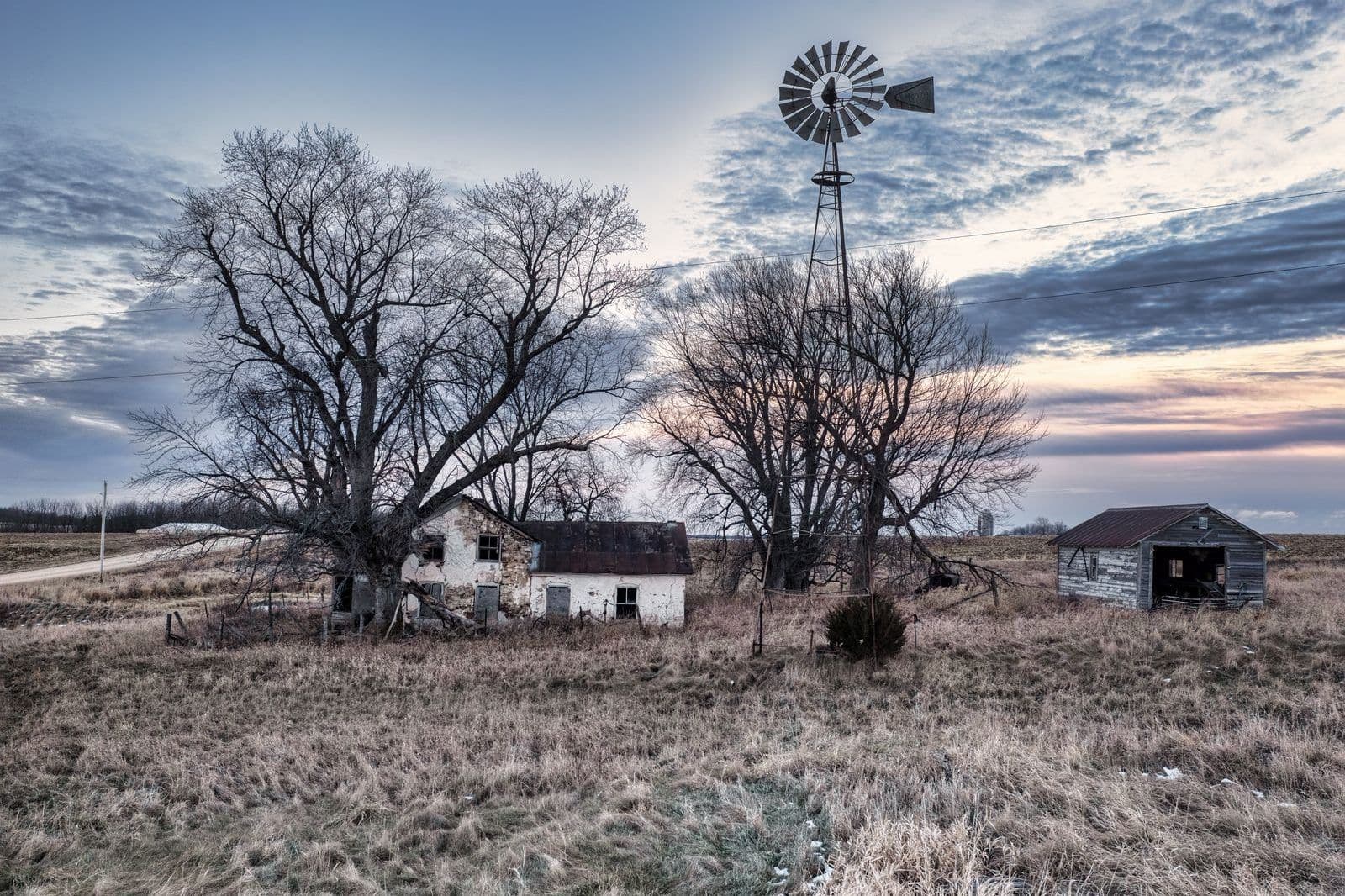
Quick Answer: A home inspection on an older North Country farmhouse covers the same systems as any house, the roof, foundation, structure, electrical, plumbing, heating, attic, insulation and interior, but the questions are different. We spend more time on stone foundations and sills, on wiring and plumbing that has been updated in pieces over the decades, on the heating system, and on the places where a later addition meets the original house.
There is a lot to love about an old farmhouse in St. Lawrence or Franklin County. Thick timbers, big kitchens, a barn out back, and a few acres of quiet. Many of these homes have stood for well over a hundred years, and plenty of them have another hundred in them. But an old house has been through many owners, many winters, and many rounds of "we'll fix that later." A careful inspection sorts out what is simply old from what actually needs attention.
We're Edith and Payen Ashley of A2A Home Inspections, and older rural homes are a big part of what we inspect across the North Country. Here's how we approach them.
The foundation and the sills
Many farmhouses here sit on fieldstone or rubble foundations, sometimes with a newer block or poured section under an addition. A stone foundation that has stayed dry and been kept up can be perfectly sound. What we look for:
- Loose or missing stones and mortar that has washed out of the joints
- Bowing or leaning walls, especially on the uphill side where soil and frost push hardest
- Water entry, efflorescence and damp patches, and where the water seems to come from
- The sill beams where the wood framing rests on the stone, a common spot for rot when the grade outside has crept up over the years
We also look at how the floor framing has been supported. Old houses often have posts, jacks or extra beams added over time. Some are solid fixes and some are temporary ones that became permanent. We'll tell you which is which as best we can from what's visible.
Framing and the roof
Original framing in an old farmhouse is often heavier than anything built today, but it has had a long time to sag, settle, or be cut into. In the attic and the basement we look for sagging rafters and ridges, cut or notched joists, and signs of past roof leaks. Outside, we look at the roof covering, the flashing at chimneys and dormers, and the gutters.
Heavy North Country snow loads find every weak spot. A ridge line that dips, or rafters that have been sistered in a hurry, is worth understanding before you buy.
Electrical: decades of updates
Very few old farmhouses still have their original wiring, but many have a mix of eras. It's common to find a modern panel feeding some newer circuits alongside older ones, ungrounded outlets in the original rooms, and wiring run by a previous owner to the barn or a workshop.
We check the service, the panel, the visible wiring, and a representative number of outlets, and we flag anything that looks like a safety concern, such as older wiring types still in use, overloaded circuits, or amateur splices. If something needs a closer look, we'll recommend a licensed electrician.
Plumbing and the water supply
Plumbing in an old house often tells the story of every renovation. Copper, galvanized steel, plastic and sometimes cast iron can all show up in the same basement. We look at supply and drain lines, the water heater, visible leaks and corrosion, and signs that pipes have frozen and been patched in the past. Pipes running along exterior walls or through unheated spaces are a winter risk we always point out.
Most farmhouses outside the villages are on a private well, so we strongly suggest adding water quality testing to the inspection. A home inspection looks at the plumbing you can see; only a lab test tells you what is in the water. We explain why in our guide to what a full well water test covers.
Heating: the system that matters most
Heat is not optional here. Older farmhouses are heated every way you can imagine: oil or propane boilers, forced-air furnaces, wood stoves, outdoor wood boilers, and sometimes several at once. We note the type, approximate age and condition of the heating equipment, check that it runs, and look at venting.
Wood stoves and their chimneys deserve a specialist's eye, so if the home relies on wood heat we'll usually recommend a certified chimney sweep before the first fire of the season.
Attic, insulation and drafts
Many old farmhouses were built with little or no insulation in the walls, and the attic is often where previous owners tried to make up for it. We look at insulation depth and coverage, ventilation, and signs of past ice dams along the eaves. Old windows, open wall cavities and gaps at the rim joist all show up as drafts and high heating bills. None of these are deal-breakers, but they help you budget for the first few winters.
Additions and the barn
Most farmhouses have grown over time: a kitchen wing, a mudroom, an enclosed porch. Where a newer addition meets the original house is one of the most common places for leaks, settling and roof trouble, so we look closely at those joints.
Let us know about barns, garages and other outbuildings when you book, so we know what's on the property and can plan the time it takes.
Radon in older homes
Older homes with stone foundations and dirt-floor sections in the basement can give radon an easy path inside. St. Lawrence County is in EPA Radon Zone 2, and the only way to know a home's level is to test it. Radon testing can be done during your inspection period. Read more in our radon testing guide.
Frequently asked questions
Is an old farmhouse a bad investment?
Not at all. Many are solid, well-built homes. An inspection helps you understand the condition of this particular house so you can buy with your eyes open and plan for repairs.
How long does an inspection take on an older home?
Most inspections take two to three hours. Larger or more complicated older homes can take longer.
Do you open walls or move stored items?
No. A home inspection is visual and non-invasive. We don't open walls or perform destructive testing, and we'll note any area we couldn't reach.
What should I add to an older farmhouse inspection?
For most rural farmhouses, water quality testing for the well and radon testing are the two tests we recommend adding.
Related Reading
- Pre-Purchase Inspection Checklist for Northern NY Buyers
- What a Residential Well Water Test Covers in Northern NY
- Radon Testing in St. Lawrence County, NY
- How Much Does a Home Inspection Cost in St. Lawrence County, NY?
Looking at an older farmhouse in St. Lawrence or Franklin County? A2A Home Inspections is New York State licensed and inspects homes throughout the North Country. Call (315) 869-8560 or contact us to book your home inspection.